
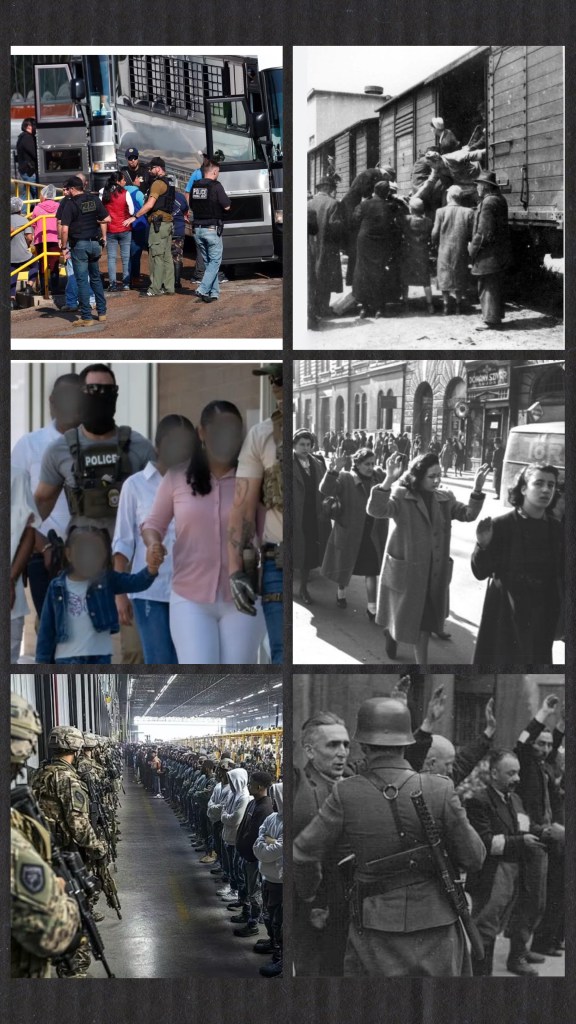
First They Came
By Martin Niemöller
First they came for the socialists, and I did not speak out—
Because I was not a socialist.
Then they came for the trade unionists, and I did not speak out—
Because I was not a trade unionist.
Then they came for the Jews, and I did not speak out—
Because I was not a Jew.
Then they came for me—and there was no one left to speak for me.
Citation:
Niemöller, Martin. First They Came. United States Holocaust Memorial Museum Wikipedia. Accessed [Date].
Historical Context
Martin Niemöller, a German Lutheran pastor, initially supported Hitler’s rise but soon became disillusioned when the Nazi regime sought to control religious institutions. He spoke out against Nazi policies, particularly their restrictions on church independence, and was ultimately arrested in 1937, spending eight years in concentration camps (Sachsenhausen and Dachau).
This poem is a reflection of his regret for not speaking out sooner. It serves as a stark warning against apathy and silence in the face of oppression. Over time, different versions of the poem have emerged, adjusting the groups mentioned, but the core message remains the same: the importance of standing in solidarity with those facing injustice before it is too late.
Why This Poem Matters Today
Niemöller’s words continue to be cited in activism, education, and remembrance, reminding us that injustice thrives when people hesitate to act. It’s a powerful call for responsibility and vigilance, ensuring that history’s lessons guide our present decisions.

 A Call To Action